
At Twopoint Studio, affordable housing makes up more than half of our work. We believe housing is foundational to the success and longevity of Baltimore City.
But housing policy, affordability, and homelessness are often misunderstood.
What does “affordable” really mean?
Who qualifies for assistance?
What does homelessness actually look like?
In advance of National Fair Housing Month in April 2026, we launched a series, “What’s Your Housing IQ?" to break down definitions, challenge assumptions, and explore how housing equity shapes our communities.
To understand “affordable housing,” we first must understand Area Median Income (AMI) — the midpoint of a region’s income distribution. Half of households earn more than the median, and half earn less.
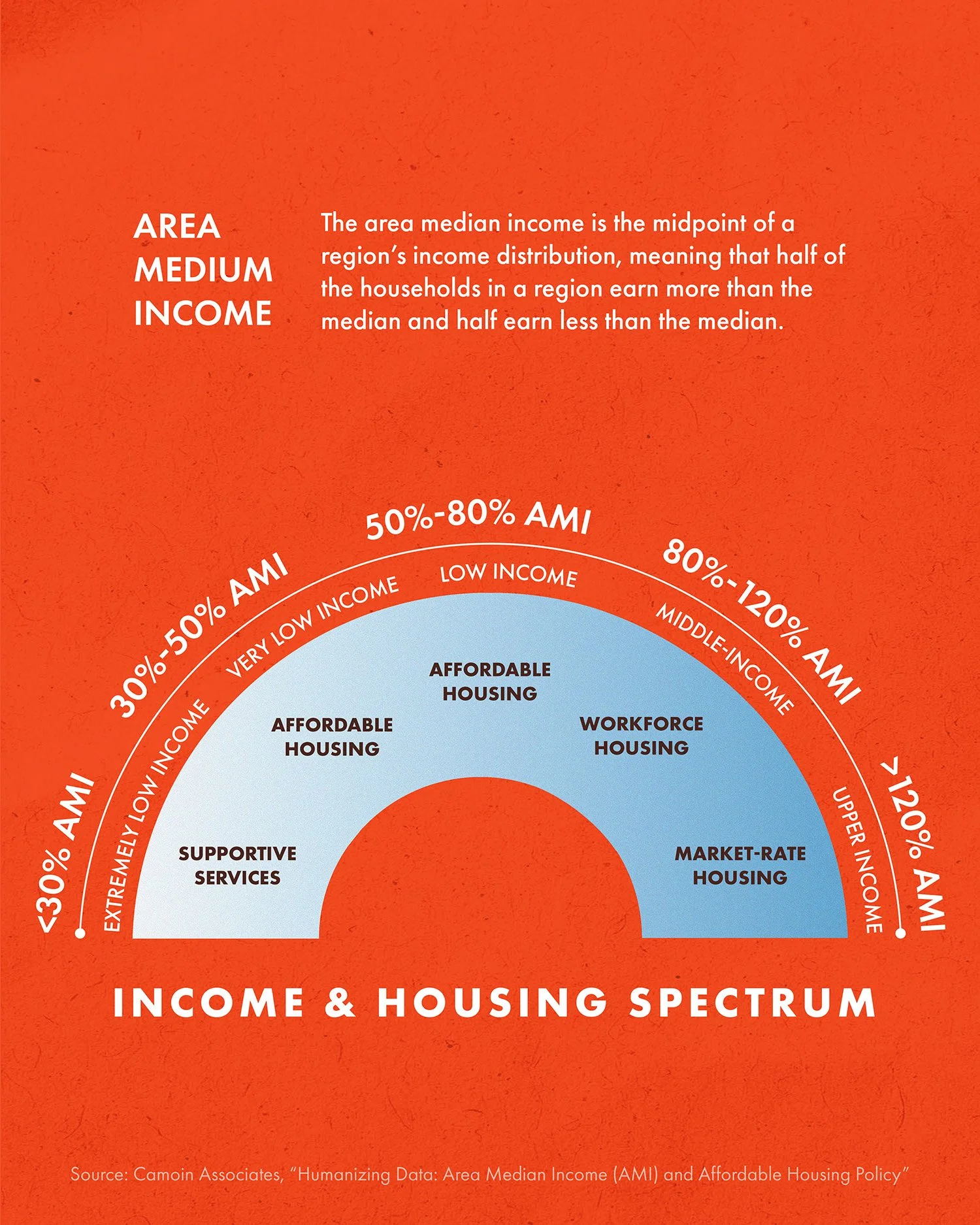
AMI isn't just a statistic. It determines who qualifies for housing programs, tax credit, and vouchers, how developments are financed, and what is considered "affordable". But AMI can also mask inequities. Understanding AMI is the foundation of understanding housing policy — and housing equity.
Affordable housing is defined using Area Median Income (AMI) — a number set annually by HUD based on U.S. Census and American Community Survey data.
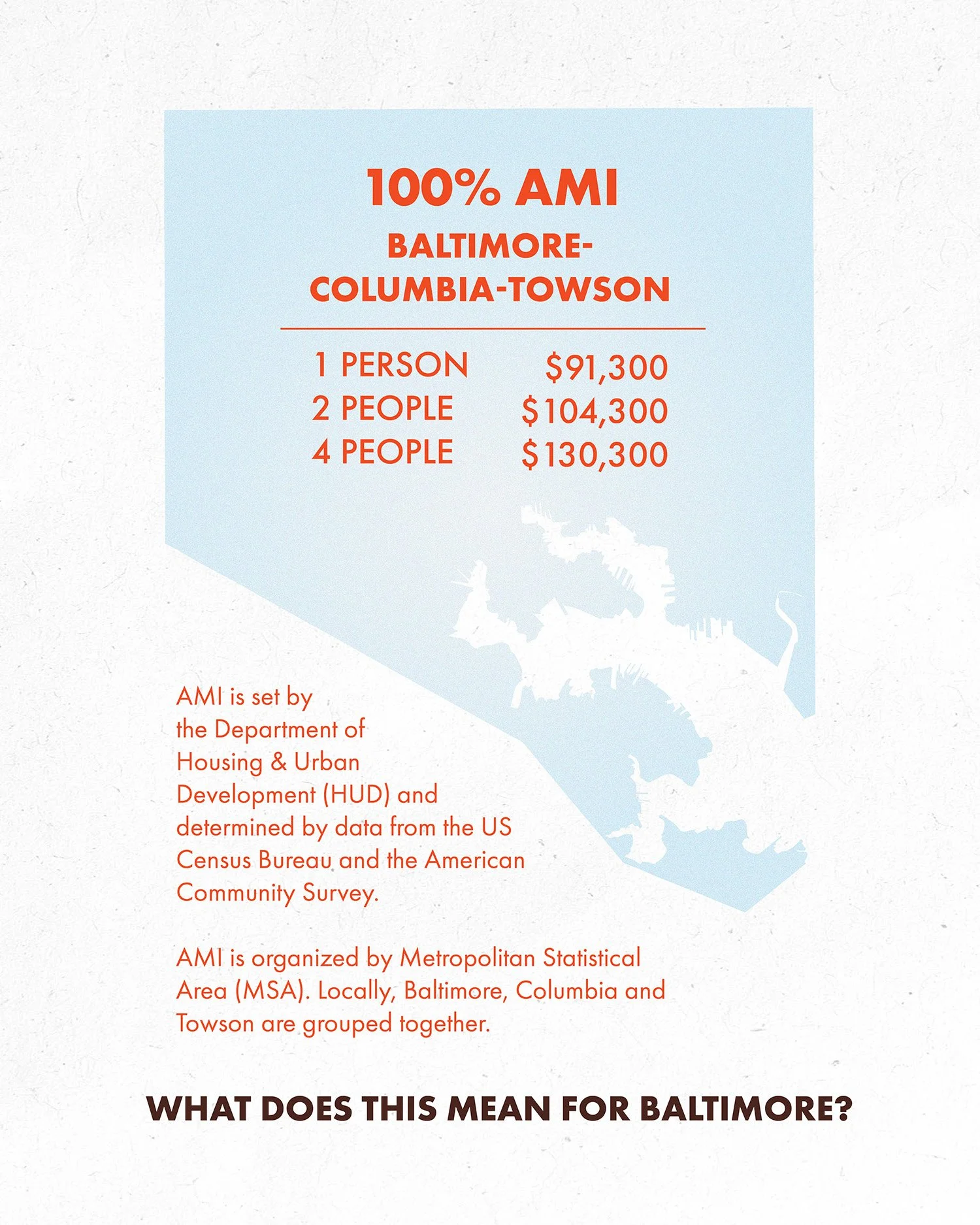
For the Baltimore–Columbia–Towson region, 100% AMI ranges from:
$91,300 for one person, $104,300 for two people, and $130,300 for a family of four
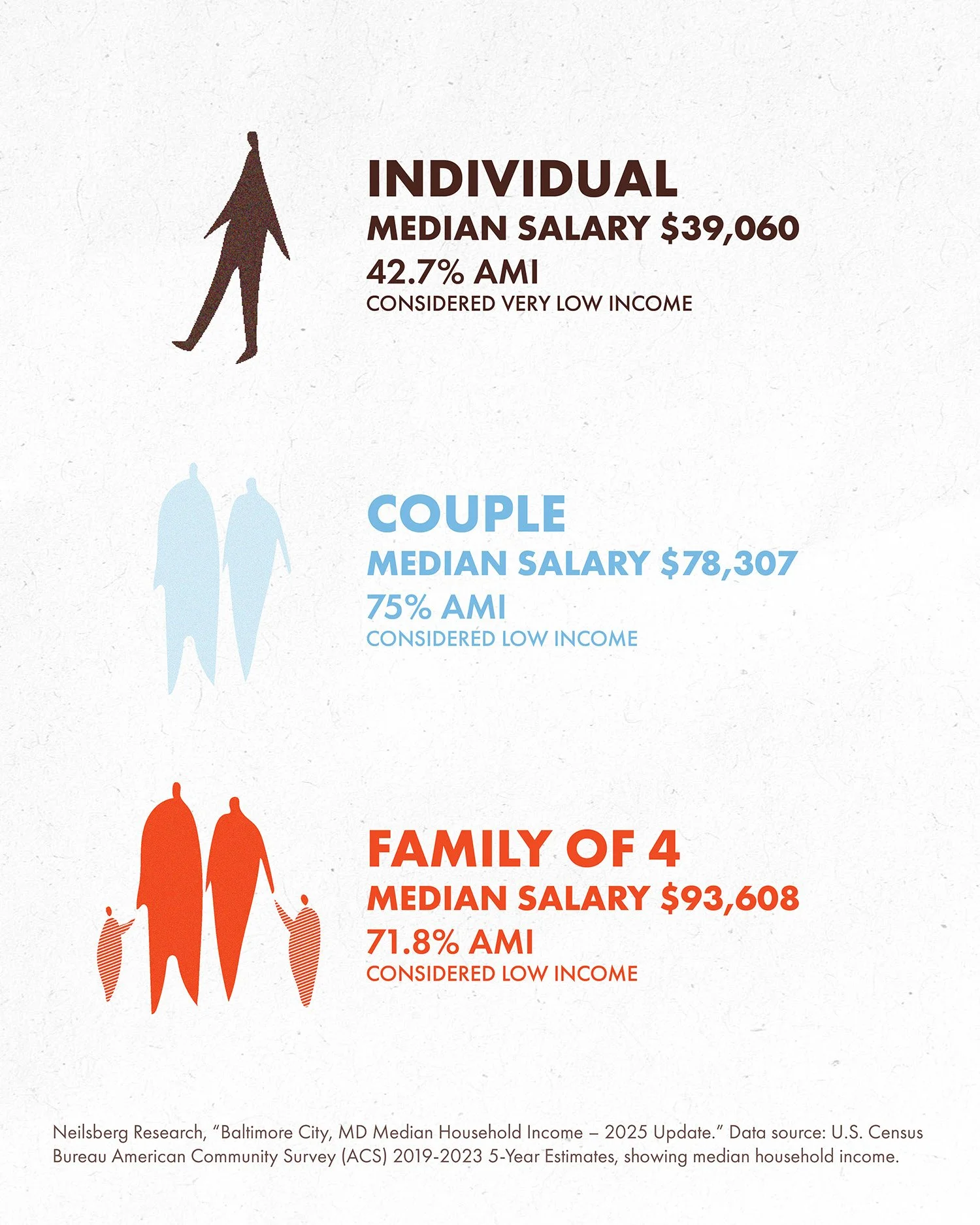
The median income in Baltimore City is lower than the regional AMI. That means many individuals and families in Baltimore fall into “low income” or “very low income” categories when compared to the broader metro area. AMI shapes eligibility for housing programs, but it also reveals how regional averages can mask local disparities.
In 2024, 771,480 people experienced homelessness in the United States — an 18% increase from the previous year. The fastest-growing groups are families with children and older adults. But what’s visible is only part of the story.
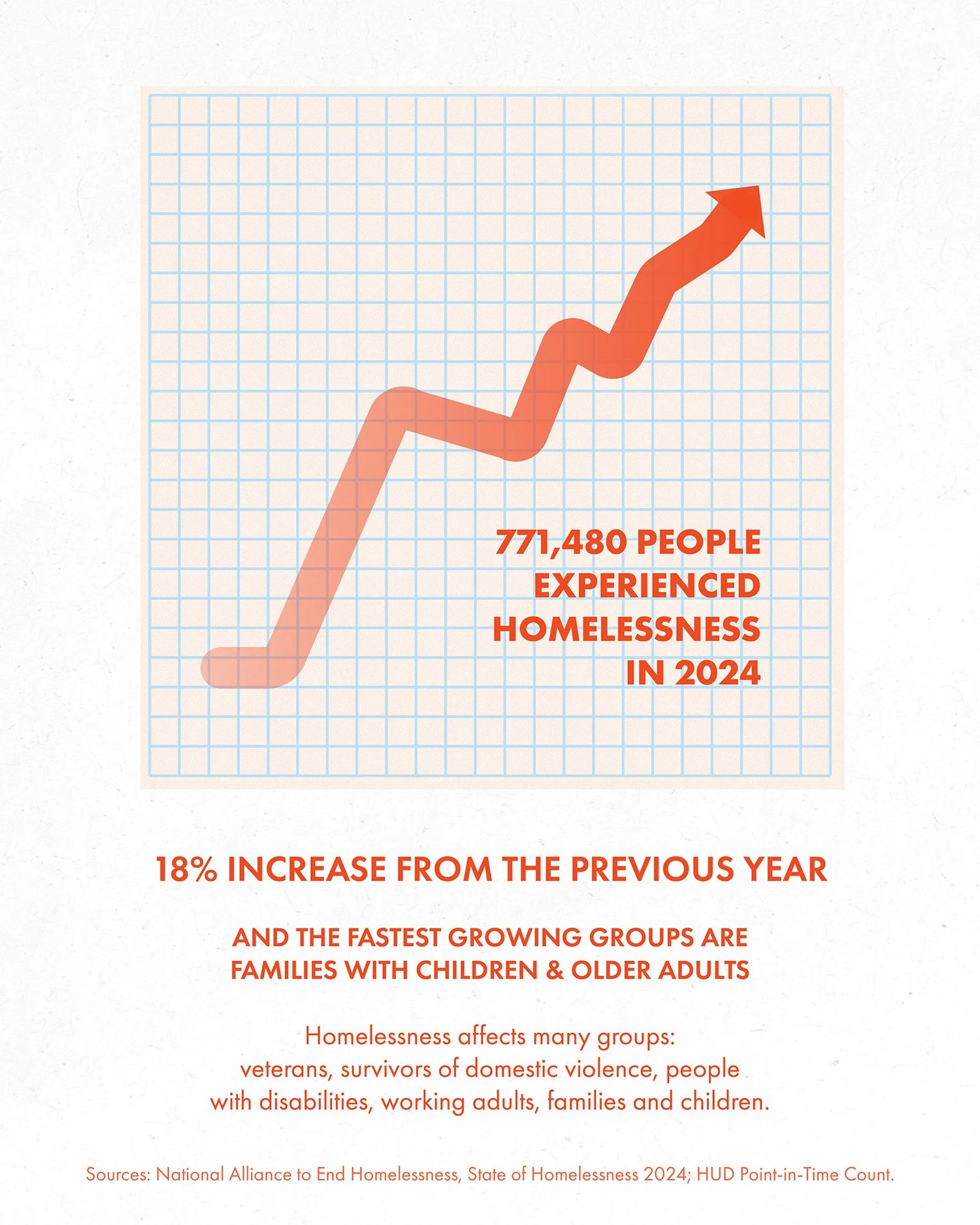
The 700,000+ figure comes from the annual Point-in-Time count, which captures people staying in shelters or living unsheltered on a single night. It does not fully reflect hidden homelessness.
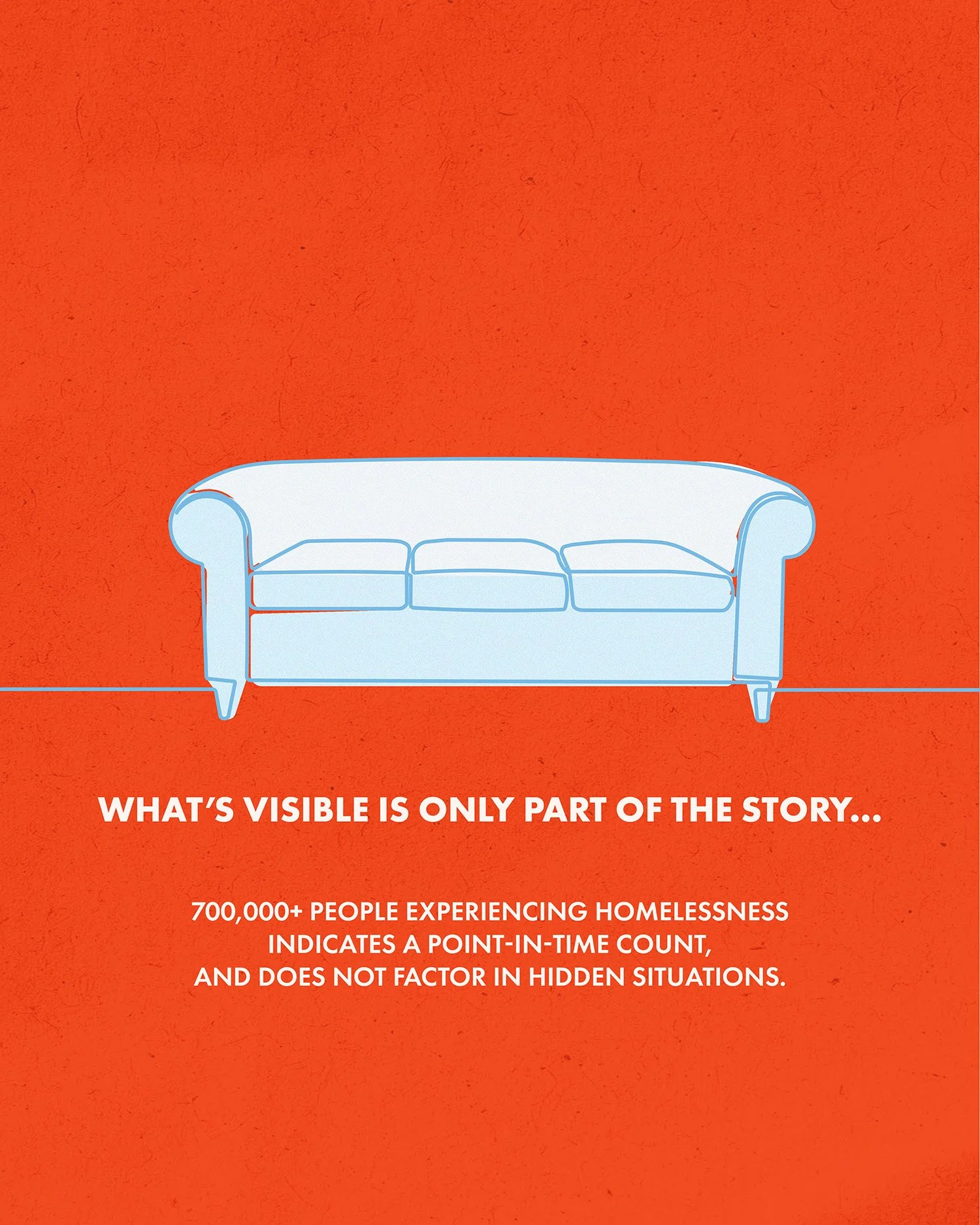
Understanding who is counted (and who isn’t) is essential to understanding the full scope of the housing crisis.
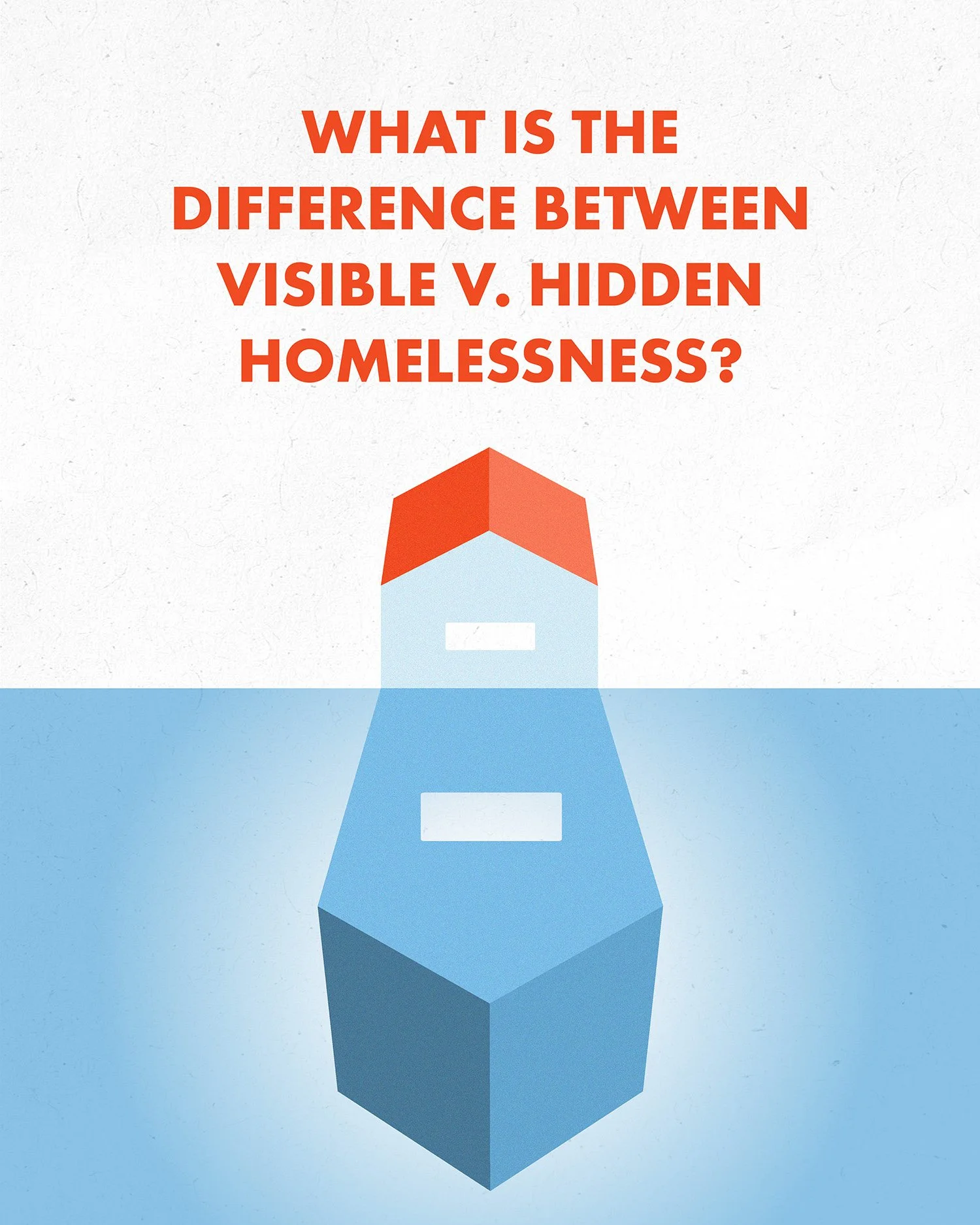
We talk about homelessness, but are we seeing the full picture?
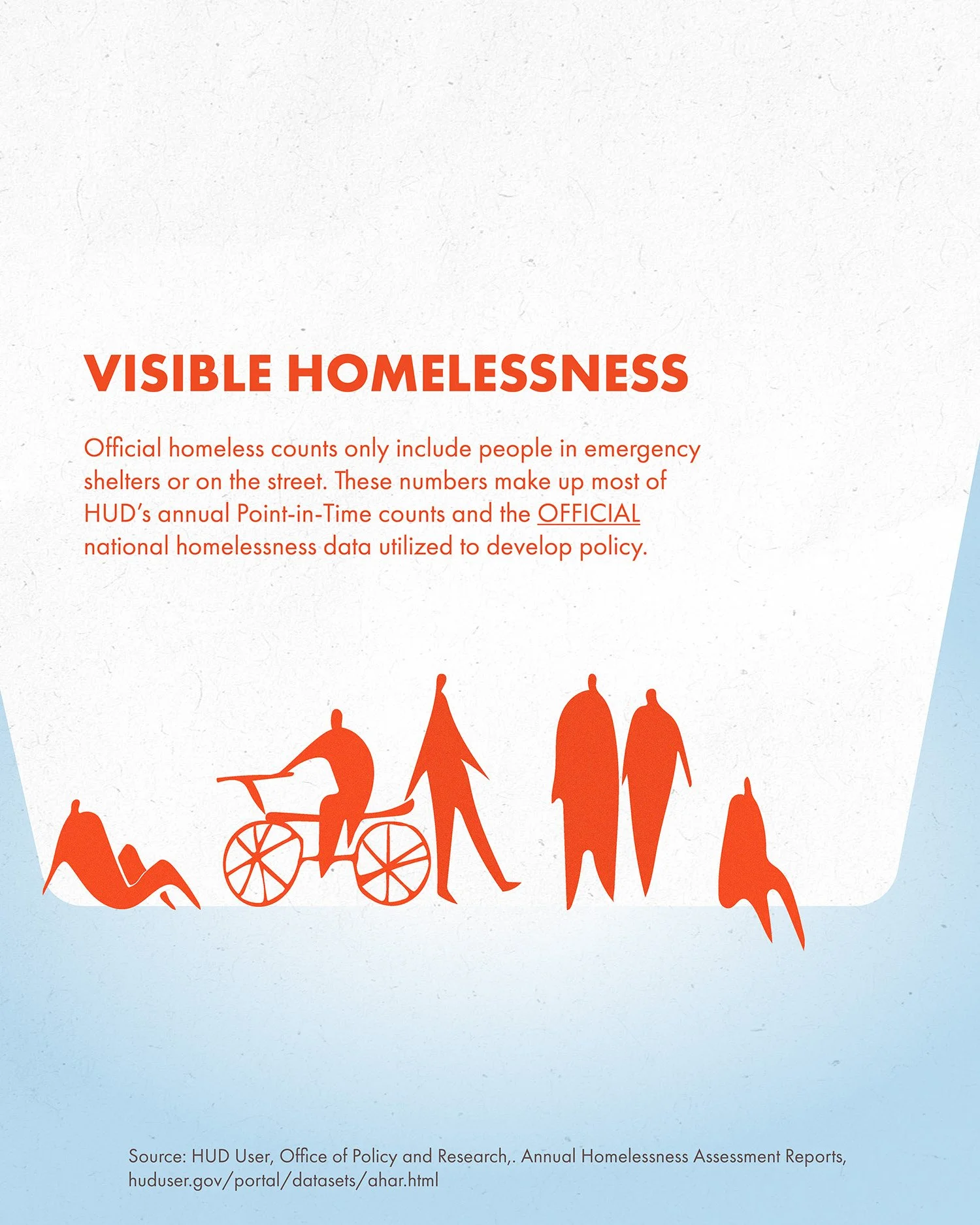
The numbers you hear most often —like the 771,480 people counted in 2024 — come from HUD's annual Point-in-Time count. That count captures people in shelters or on the street on a single night. It's the official data used to shape national policy. But it doesn't capture everyone.
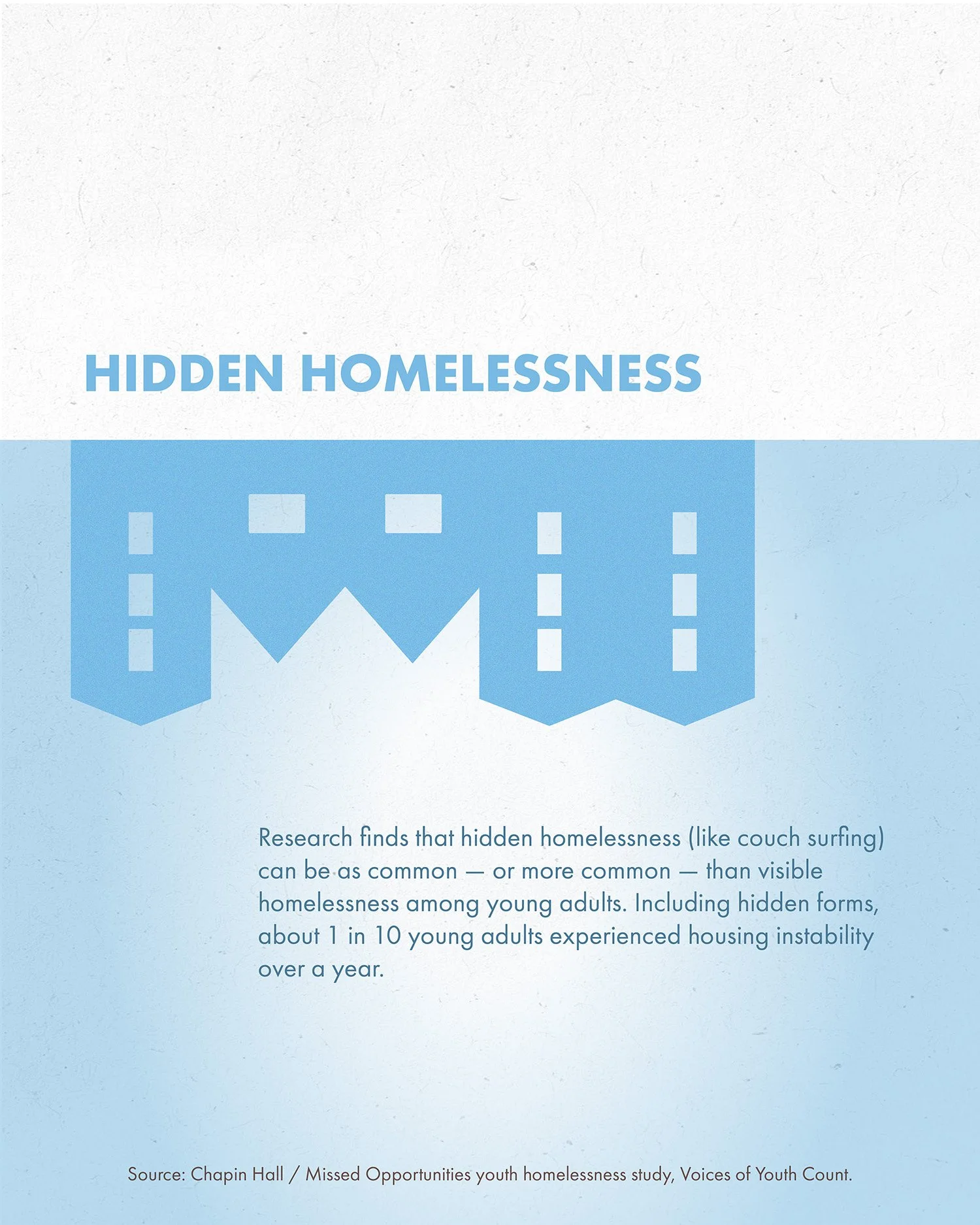
Hidden homelessness (couch-surfing, temporary stays, doubling up) is harder to count and often left out of the headline numbers. How we define homelessness determines who gets counted. Definitions aren't just technical. They shape funding, eligibility, and who remains invisible in the housing crisis.
When you picture someone who receives housing assistance, who do you see?
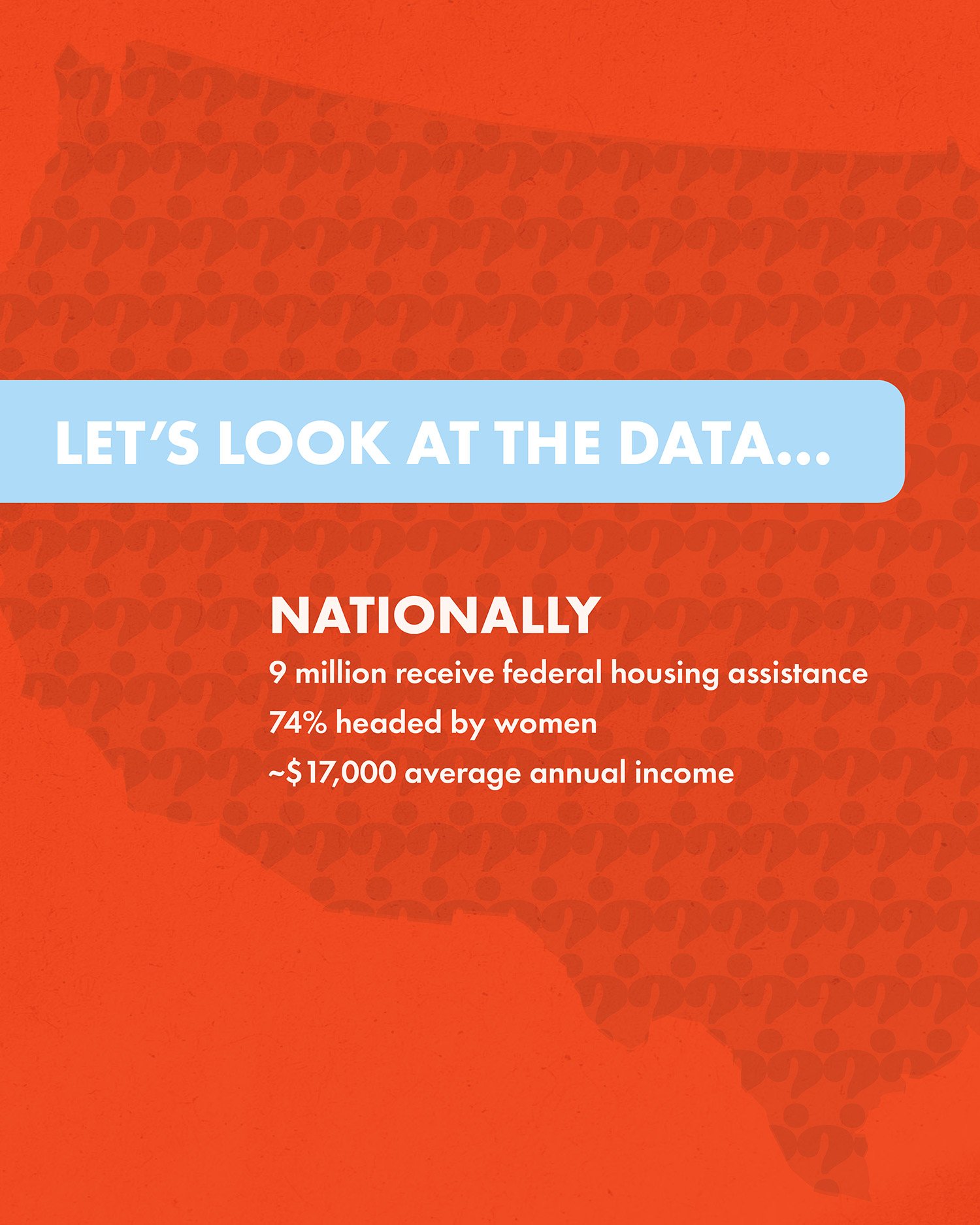
Housing assistance takes many forms in this country. The mortgage interest deduction supports homeowners. Low-Income Housing Tax Credits flow to developers. Vouchers and public housing serve renters. Government support for housing isn't exceptional — it's structural. The question is who it reaches.
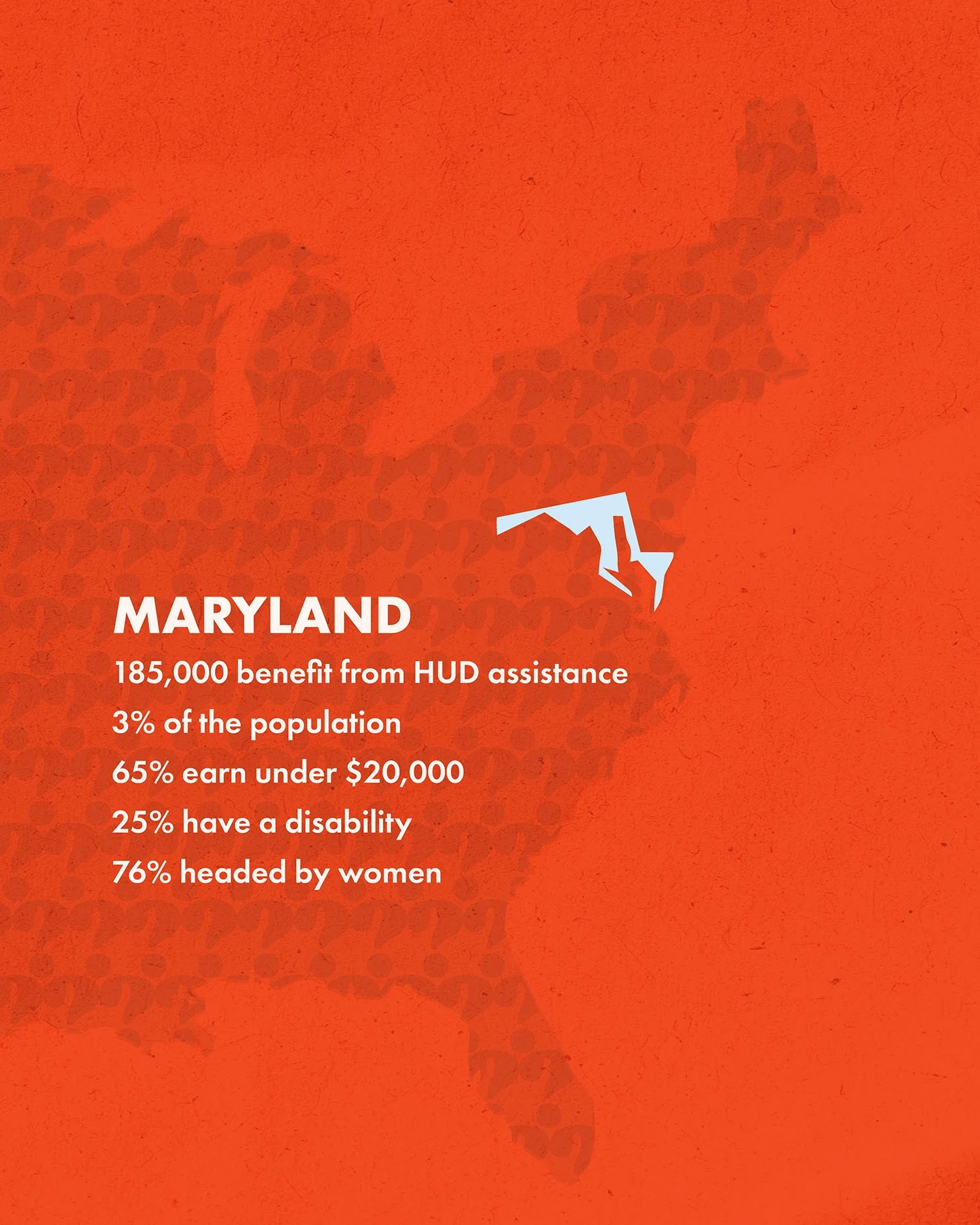
Federal housing assistance isn't a niche program. It's part of a system that touches nearly every American, in one form or another.
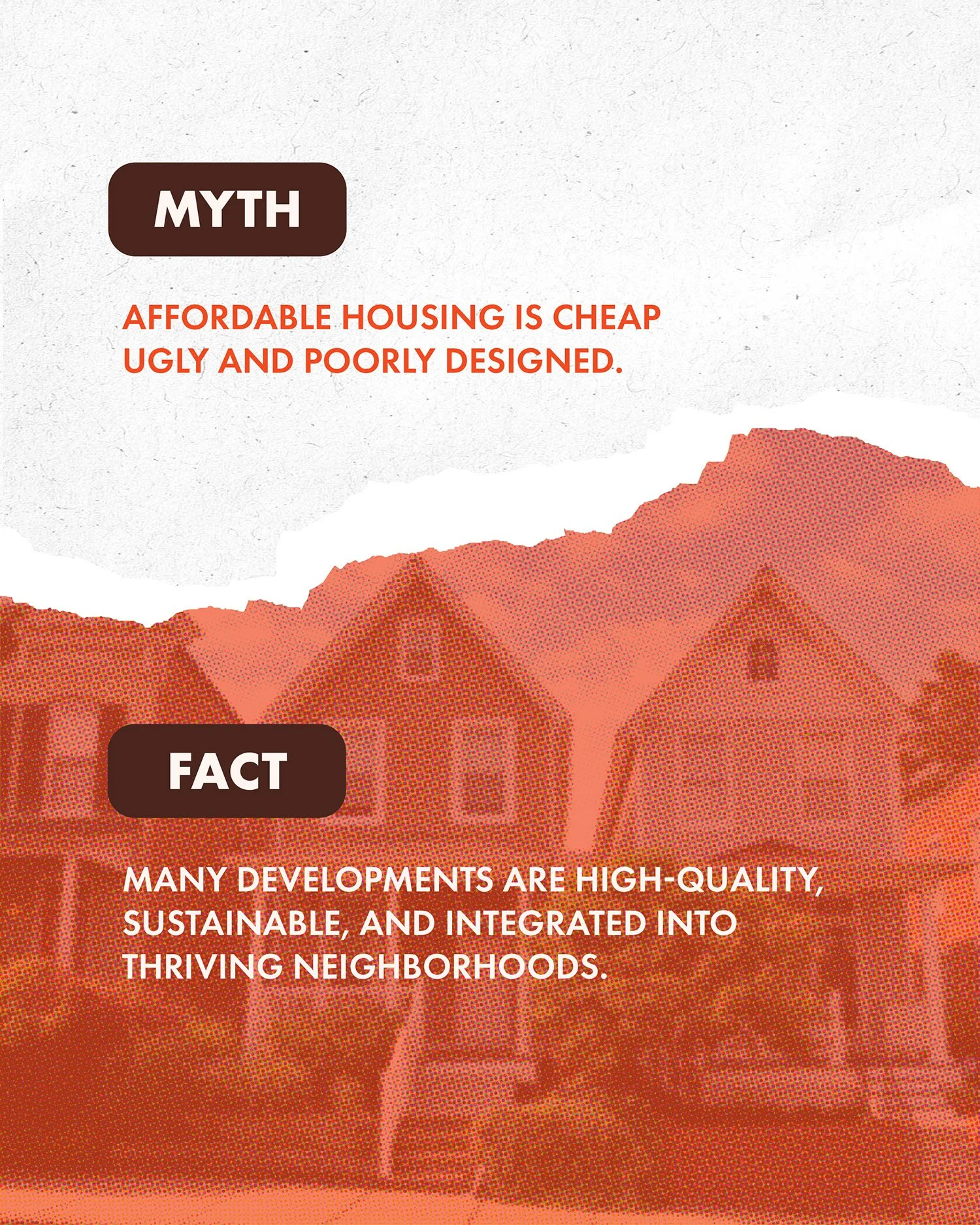
Affordable housing is one of the most misunderstood issues in local policy, and that misunderstanding has real consequences.
Fact: Many developments are high-quality, sustainable, and integrated into thriving neighborhoods. (We'd know — it's more than half of what we do.)
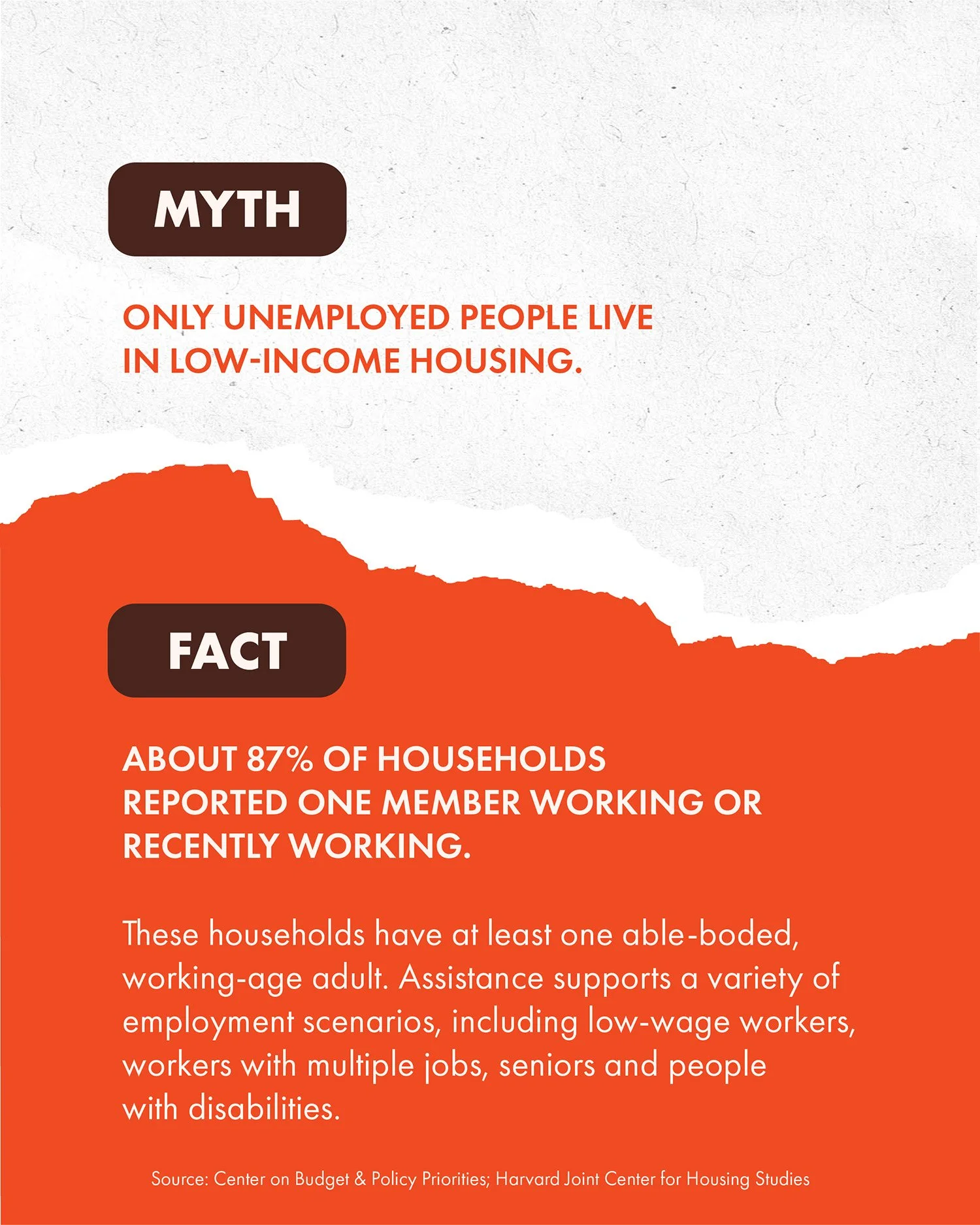
Fact: About 87% of households reported one member working or recently working. These households have at least one able-bodied, working-age adult. Assistance supports a variety of employment scenarios, including low-wage workers, workers with multiple jobs, seniors, and people with disabilities.
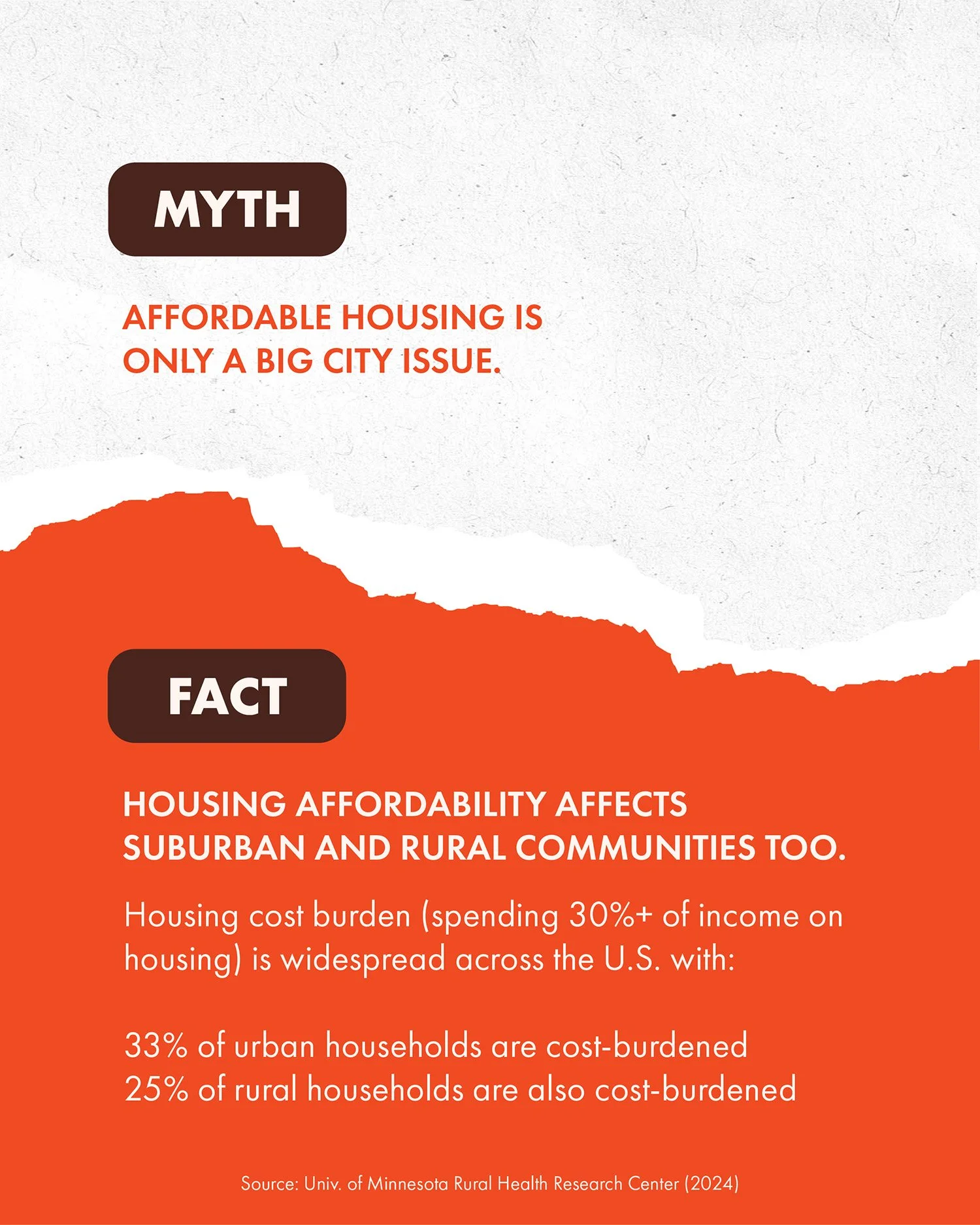
Fact: 33% of urban households are cost-burdened. So are 25% of rural ones. This is an everywhere issue.
If housing is the foundation, what happens when we lead with it?
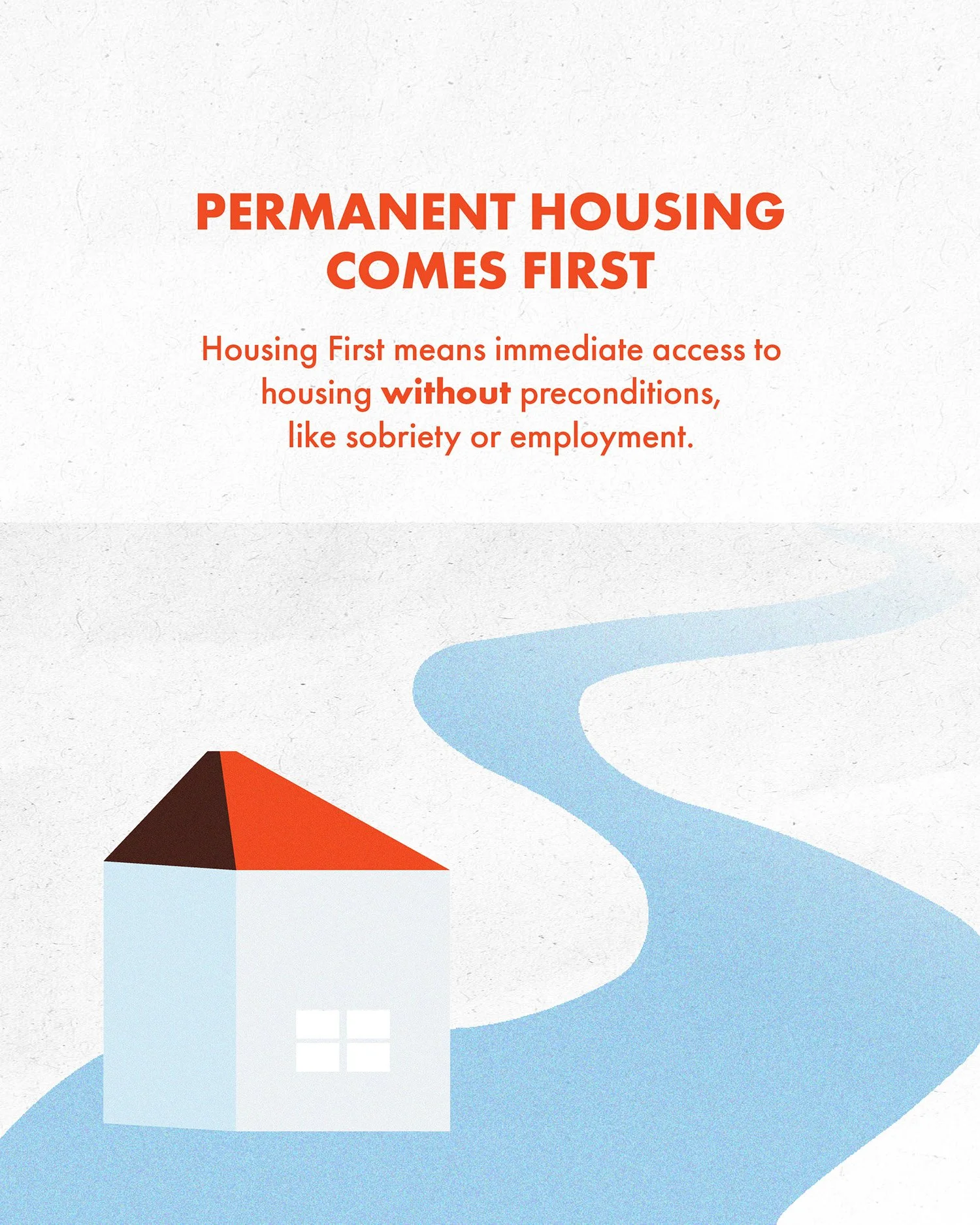
Housing First is a policy approach that prioritizes immediate access to permanent housing, without preconditions like sobriety or employment. The core premise: stability isn't a reward for getting your life together. It's what makes getting your life together possible.
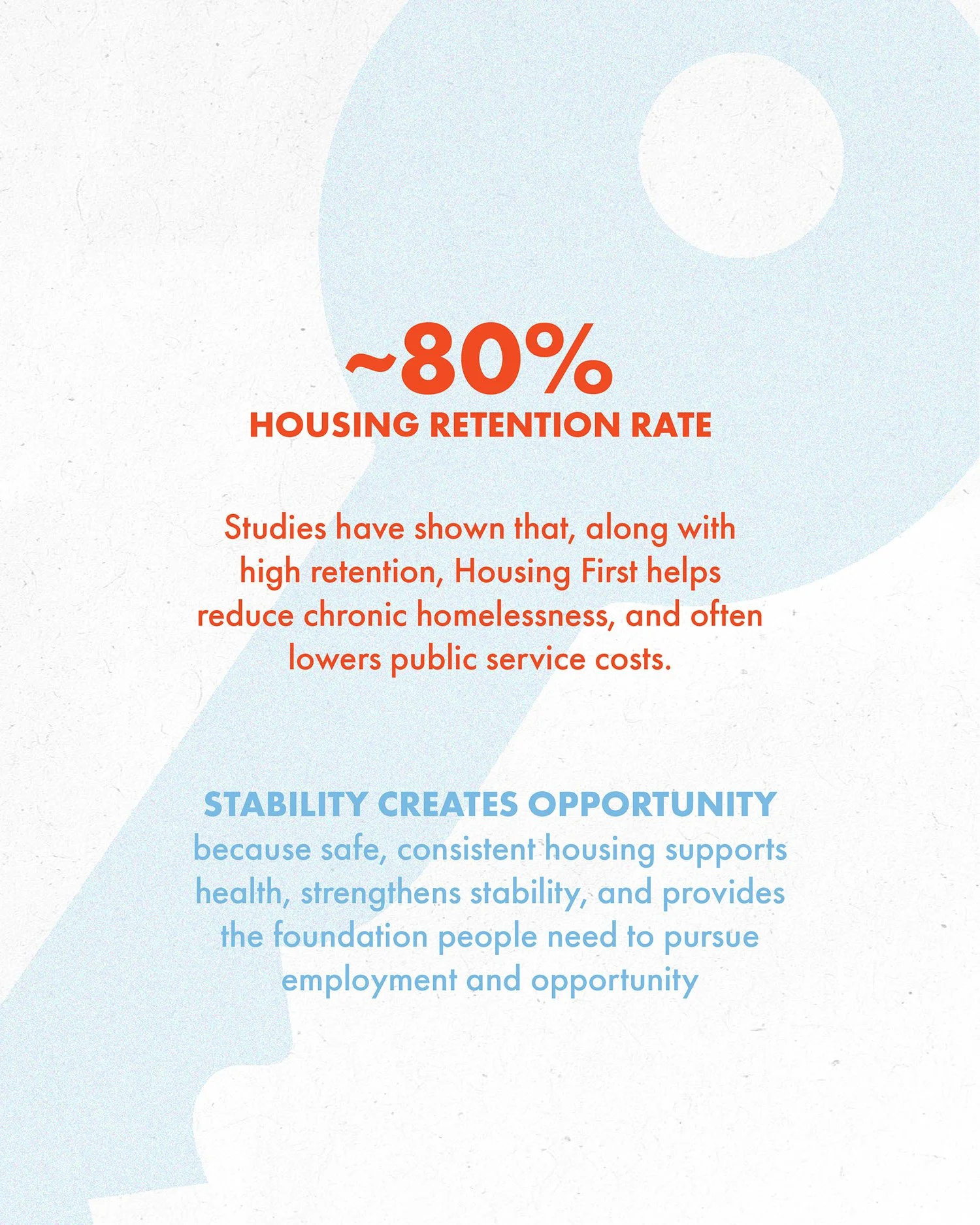
Studies consistently show a housing retention rate of around 80%. Housing First also reduces chronic homelessness and often lowers public service costs, including emergency room visits and crisis intervention. Safe, consistent housing supports health, strengthens families, and creates the conditions for employment, education, and opportunity.
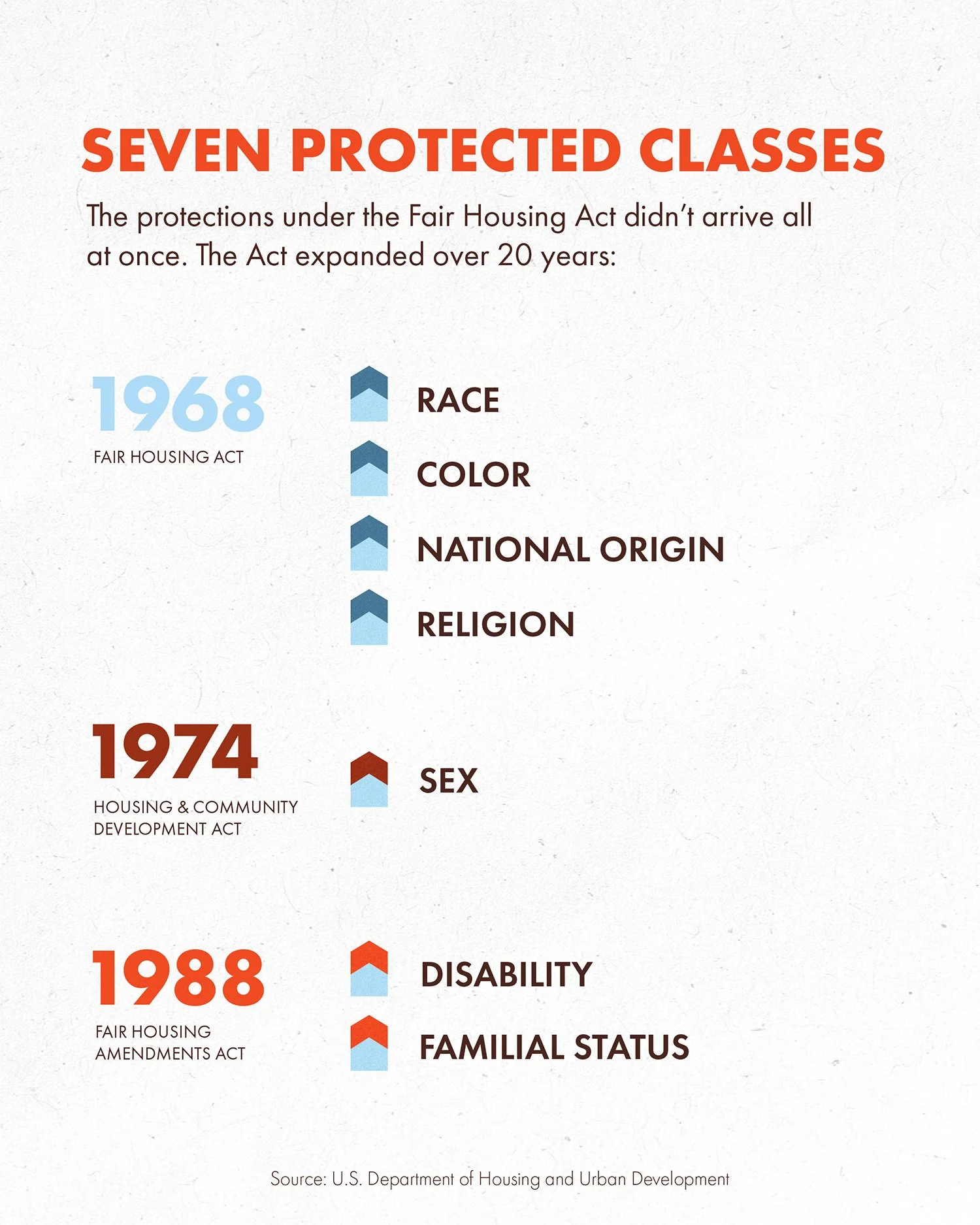
57 years ago, President Lyndon B. Johnson signed the Fair Housing Act of 1968, prohibiting discrimination in the sale, rental, and financing of housing based on race, color, national origin, and religion. Enacted days after Martin Luther King Jr.'s assassination, it expanded the Civil Rights Act of 1964, later broadened to include sex, disability, and familial status.
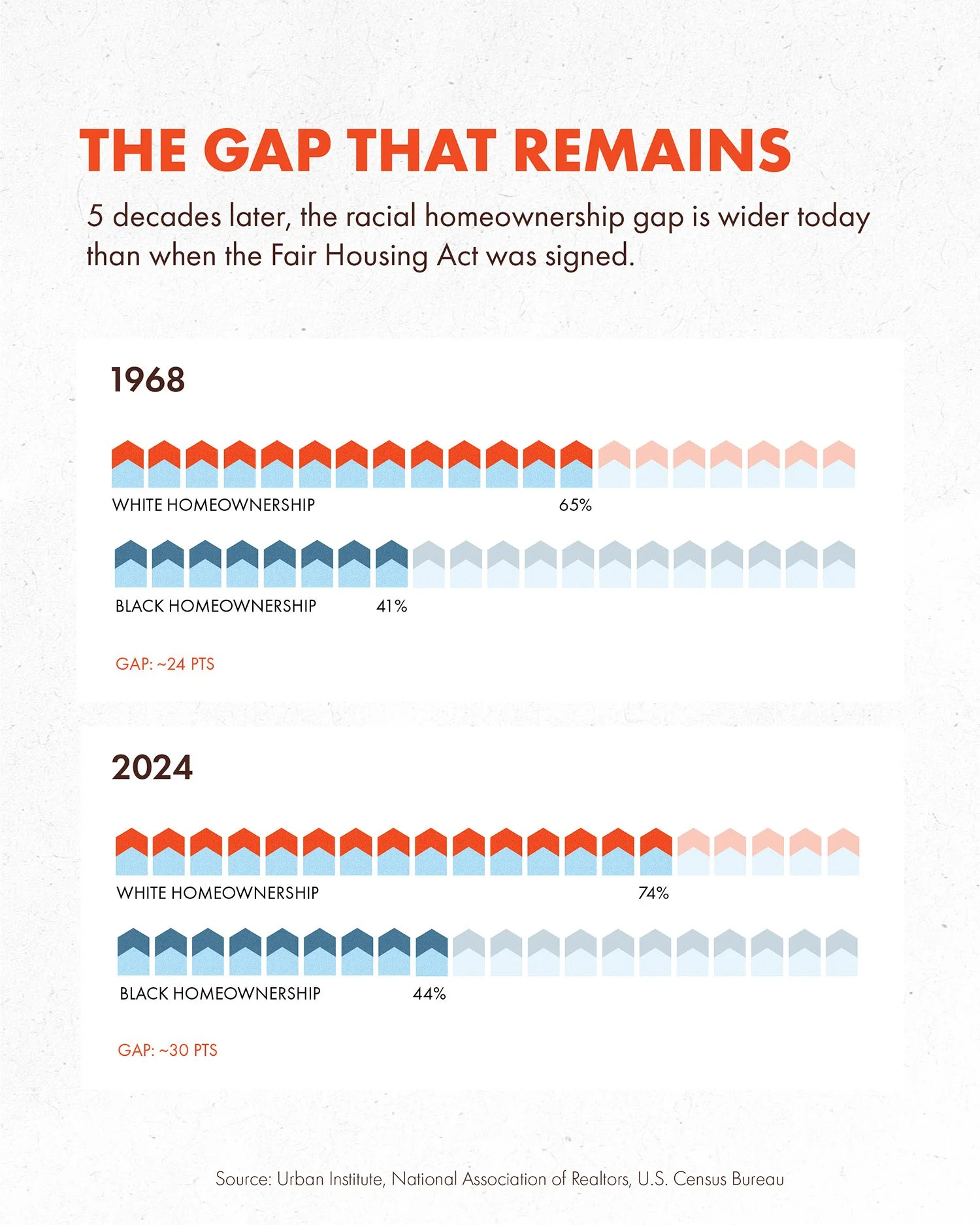
It was a turning point. However, housing discrimination — in lending, in zoning, in the design of neighborhoods — didn't disappear.
At Twopoint Studio, more than half of our work is affordable housing. We don't think of that as a specialty. We think of it as a responsibility to Baltimore and to our neighbors. That's why we spent a month asking, “What's your housing IQ?"